
Joburg's Coalition Tightrope: A Power Struggle with National Echoes
Johannesburg's post-election coalition talks are gripped by tension and public spats. Discover why this political drama has crucial implications for Durban and
Johannesburg, South Africa's economic heartland, finds itself ensnared in a tense political standoff following the recent local government elections, a drama watched closely across the nation, including here in KwaZulu-Natal. As parties scramble to form a stable majority, a public spat between ActionSA leader Herman Mashaba and the Sunday Times has brought the high-stakes coalition negotiations into sharper focus, revealing the fragility of trust and the intensity of political maneuvering.
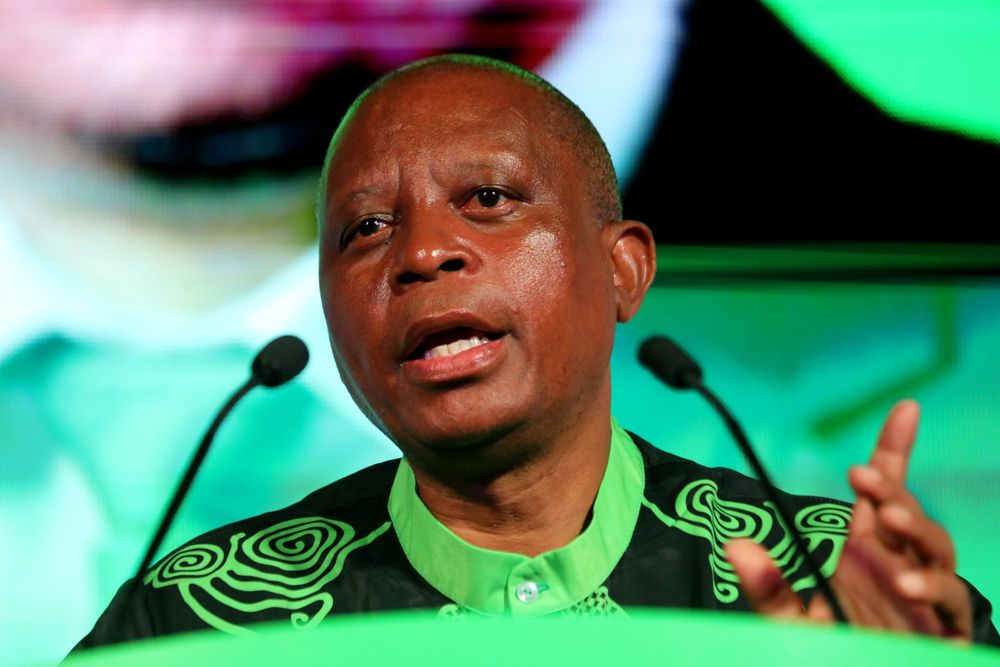
The controversy erupted when ActionSA’s Mashaba publicly slammed a report suggesting his party was pushing for the Democratic Alliance (DA) to replace Helen Zille as their mayoral candidate in Johannesburg, with Mashaba himself taking the top job. In a post on X, Mashaba accused the publication of misinformation, calling for more responsible journalism amidst an era where public trust in media is increasingly fragile. This public skirmish underscores the fraught atmosphere in which these crucial post-election discussions are unfolding.
The Coalition Chessboard: A Scramble for Power
The election results have painted a complex picture in Johannesburg. With nearly all votes tallied, the DA emerged as the leading party with 34.8% of the vote, a notable increase from their 2021 performance. The ANC followed with 20.3%, while ActionSA secured a significant 16.3%, maintaining its support base and solidifying its position as a kingmaker in the metro. The city's council, with 270 seats, requires 136 for a governing majority, a number proving elusive for any single party or straightforward alliance.
Preliminary seat projections place the DA with 91 seats and ActionSA with 43. Combined, these two parties would hold 134 seats, just shy of the required majority. This precarious balance means that even a DA-ActionSA pact would likely need the support of at least one other smaller party, adding layers of complexity to the negotiation table. The high stakes are palpable, with the future governance of the country's most populous city hanging in the balance.
Political Manoeuvring and Public Spats
Amidst the numerical challenges, the personal and party dynamics are equally intricate. While ActionSA has stated it has serious reservations about Zille’s suitability for the mayoral post, they haven't explicitly ruled out a deal involving her. This nuanced stance, coupled with Mashaba's public rebuttal of media reports, highlights the delicate dance of coalition talks where every statement, official or perceived, can influence outcomes.
Adding to the intricacy, the DA's Johannesburg mayoral candidate, Helen Zille, has expressed a preference for a two-party coalition, arguing that fewer partners lead to a more manageable administration. Meanwhile, ActionSA has already held initial, reportedly productive and respectful, discussions with the ANC – an alternative pathway that underscores the fluidity and unpredictability of the current political landscape.
The Durban, KwaZulu-Natal Angle
The political wrestling in Johannesburg might seem distant to the daily lives of residents along the Durban and KZN coast, but its implications ripple across the nation. As a major economic hub, Johannesburg's stability directly impacts investor confidence and national economic sentiment, which in turn influences tourism, business, and job creation in provinces like KwaZulu-Natal. The ability of parties to form stable, functional coalitions in a metropolis like Joburg sets a precedent and provides a barometer for future coalition dynamics at provincial and even national levels, including within KZN's own municipal and provincial governance structures. Furthermore, the strategies and alliances forged in Gauteng's political furnace can shape the national political narrative, affecting the policies and resource allocations that ultimately benefit or challenge Durban and the KZN coast. How these urban power struggles are resolved offers critical insights into the future direction of South African governance.
Source: IOL News